Biography
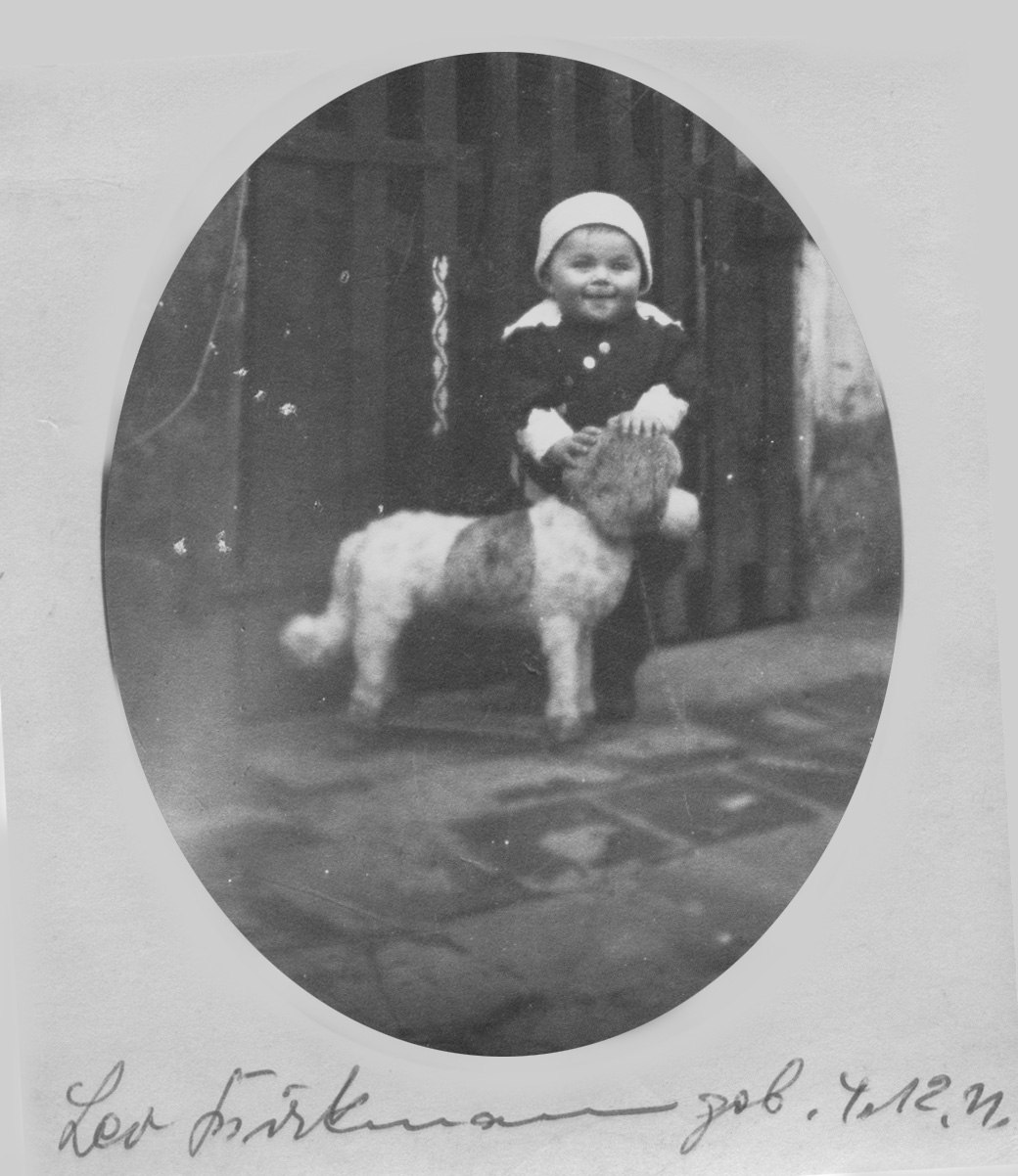
| Leo was born in Nürnberg on December 4,
1911. He came from a family of decorators/painters.
His grandfather Konrad had a business in the Veillodter Strasse,
where he lived with his wife Pauline (nee: Schuh). Leo's father Fritz
continued the business, but moved with his wife Lona to the
village of Reichelsdorf around 1930. |
 |
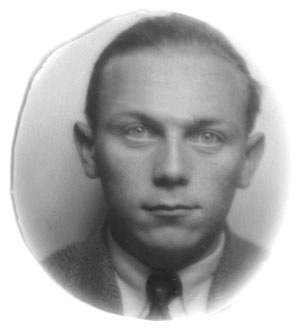 |
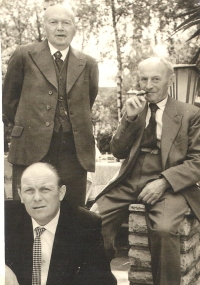
Leo met his future wife Martha "Helene" Liebert
at a dinner event of the local Agricultural Society in 1933. His
mother Lona had passed away in October of 1934, and Leo and Helene
had a private wedding ceremony
in April of 1935. Helene joined her husband at the father's house
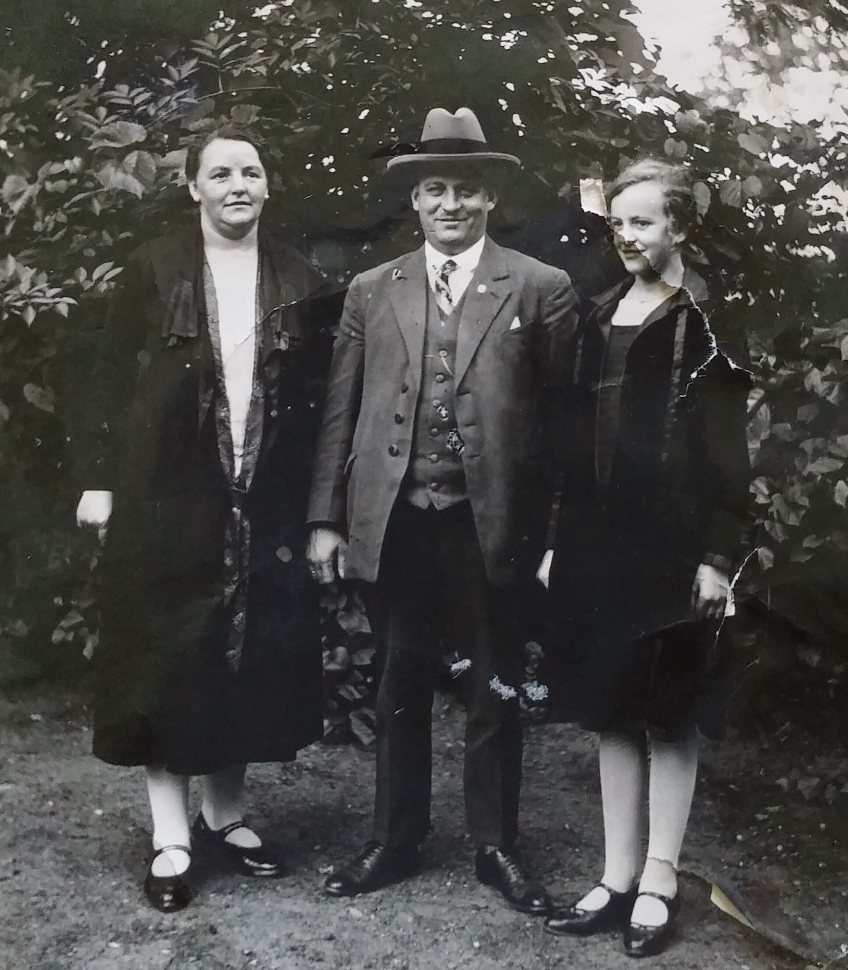
in Reichelsdorf, where they lived until 1973. (Photo on right:
Helene with her parents Elise and Theodor Liebert.) |
 |
| Helene took over a large household, that
included Leo, his father and boarders in the summer who helped with
the projects. In addition, there was a large garden to be maintained for fruits and
vegetables, as the village did not have a grocery store in those
days and residents had to plan ahead. Helene was also
instrumental in conducting the administrative side of the business:
writing proposals, doing payroll, invoicing and collecting payments.
In short, if Leo and his father were the heart of the business, she
could be considered the brains. |
 |
 |
While Leo was still working with his father
in the interior decorating business, he was also attending classes and
participated in
seminars at the Kunstschule in Nürnberg under the direction of Andreas Gering
and
Hermann Gradl.
On April 10, 1938, their son Fritz "Thilo"
was born. Thilo did not get to see his father very much during
early childhood,
when Leo was mostly away from the family during World War II, between 1940 and 1946.
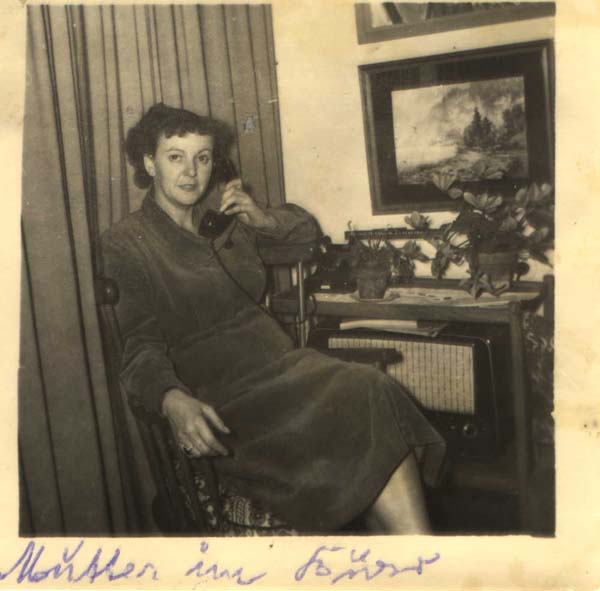
Helene sent this photo
taken in 1945 to Leo while he was a POW in Reims, France, just after Helene had just found out that her husband Leo was still
alive. |
On April 11, 1940, 28 year old Leo was
drafted to serve in Hitler's Army [Reichsarmee]. However,
World War II did not stop Leo from creating some significant master
pieces that are surfacing some 60 - 70 years later.
Therefore, we created a
special section
describing this astounding creative period that took place during a
time when the fate of so many was decided by a few. |
 |
Back with his family after being released from POW Camp in 1946,
Leo took some time to recover and entered his decades-long period of
creativity and commissioned works.
Prominent citizens in the
neighborhood, such as Mr. Hesselberger, Director of the City's
Railroad Authority [Bundesbahn] and Mr. Kern, an attorney, had their
portraits done by Leo. In addition, his participation in artist
associations in the City
of Nürnberg, i.e.,
Künstlerklause,
Berufsverband freier Künstler Nürnberg [BBK],
Der Kreis (Künstlergruppe), provided him with the connections such as the
fellowship of artists Leo Smigay who founded 'Der Kreis' in 1947, and
Helle Rossner-Böhnlein
who served with Leo Smigay and Leo Birkmann on the board of
directors of the BBK.
|
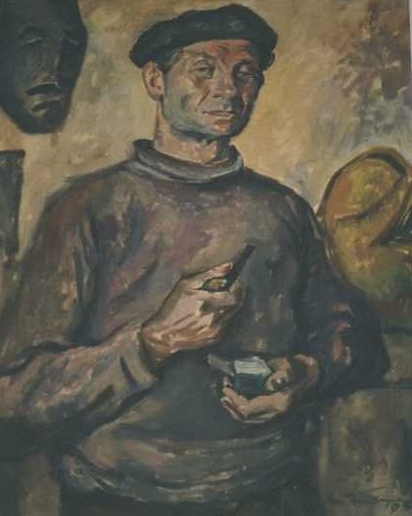
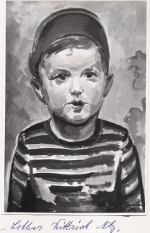
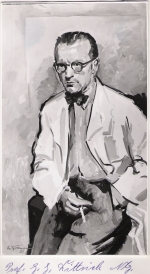
Professor Gerhard G. Dittrich
who founded the BBK and was a prominent architect in the city of
Nürnberg was, along with his son Reiner, one of the many subjects of portraits painted by Leo.
Thanks to the efficiency of Leo's wife Helene, we have at least black and
white photos available of these portraits.
Visit our
Portrait Gallery to see more
fine works of art. |
  |
|
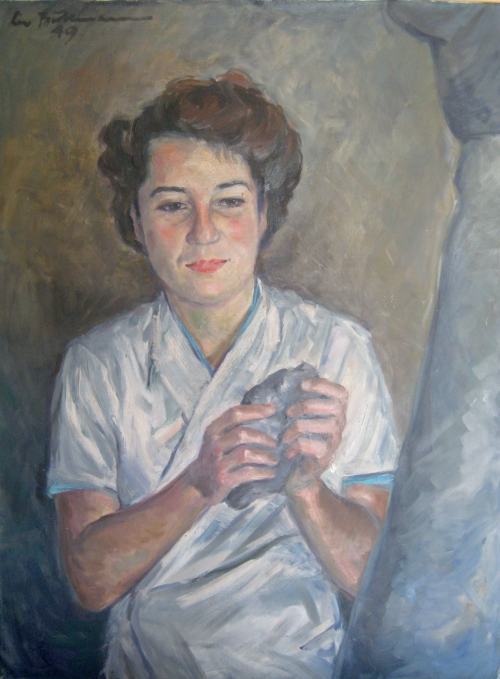
Note per Sonja Walter, nee Dittrich: The inscription on left
portrait is in error. The
subject depicted in portrait is in fact Professor Dittrich's
son Reiner. |
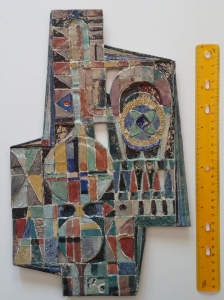 |
These connections provided opportunities to participate in projects
for the beautification of the city scape and his reputation reached
into the cities of Fürth, Bayreuth, Würzburg, Schwabach and a number of smaller townships in the vicinity.
Leo often brought a mockup of his proposal to the
negotiation table and
then proceeded to create the actual commissioned piece.
His
signature pieces were abstract impressions.
Visit our
Sculpures and
Mosaic galleries to see
what Leo has created in his sphere of influence. |
 |
As was the custom was in early 20th century and before,
Leo planned that son Thilo would enter training to become a master decorator to join the family business. Thilo, however, would often fall ill from the odor of the paint,
while he was an apprentice in the family business. It became obvious that this was not a
career
that Thilo could pursue.
|
| In 1957, Thilo married the beautiful Olga, daughter of Friederike and Karl Briegel, who lived in the nearby
Nürnberg suburb of Eibach, and pursued a different career to provide for
the wife and two daughters, Helen and Anita. |
| Meanwhile, Leo had established himself as a popular artist in the city of Nürnberg and was able to make a comfortable living by focussing entirely on creative art. |
 |
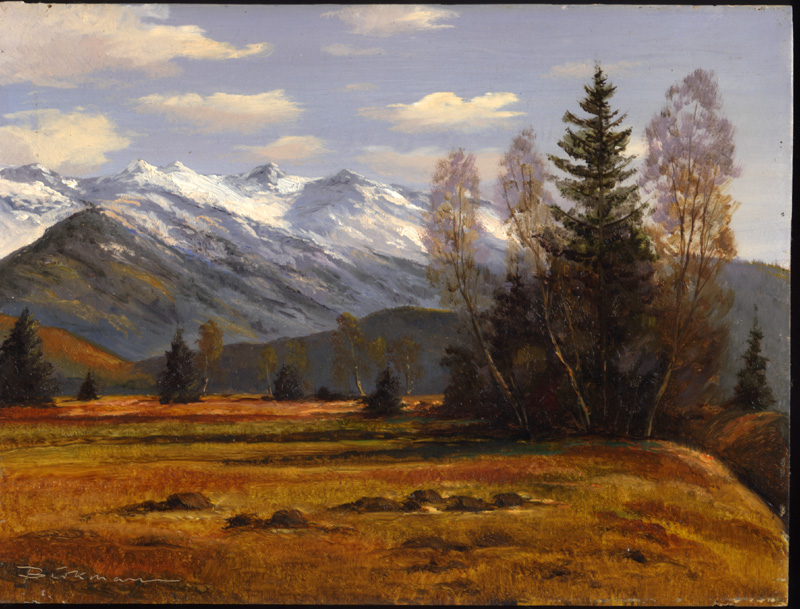 |
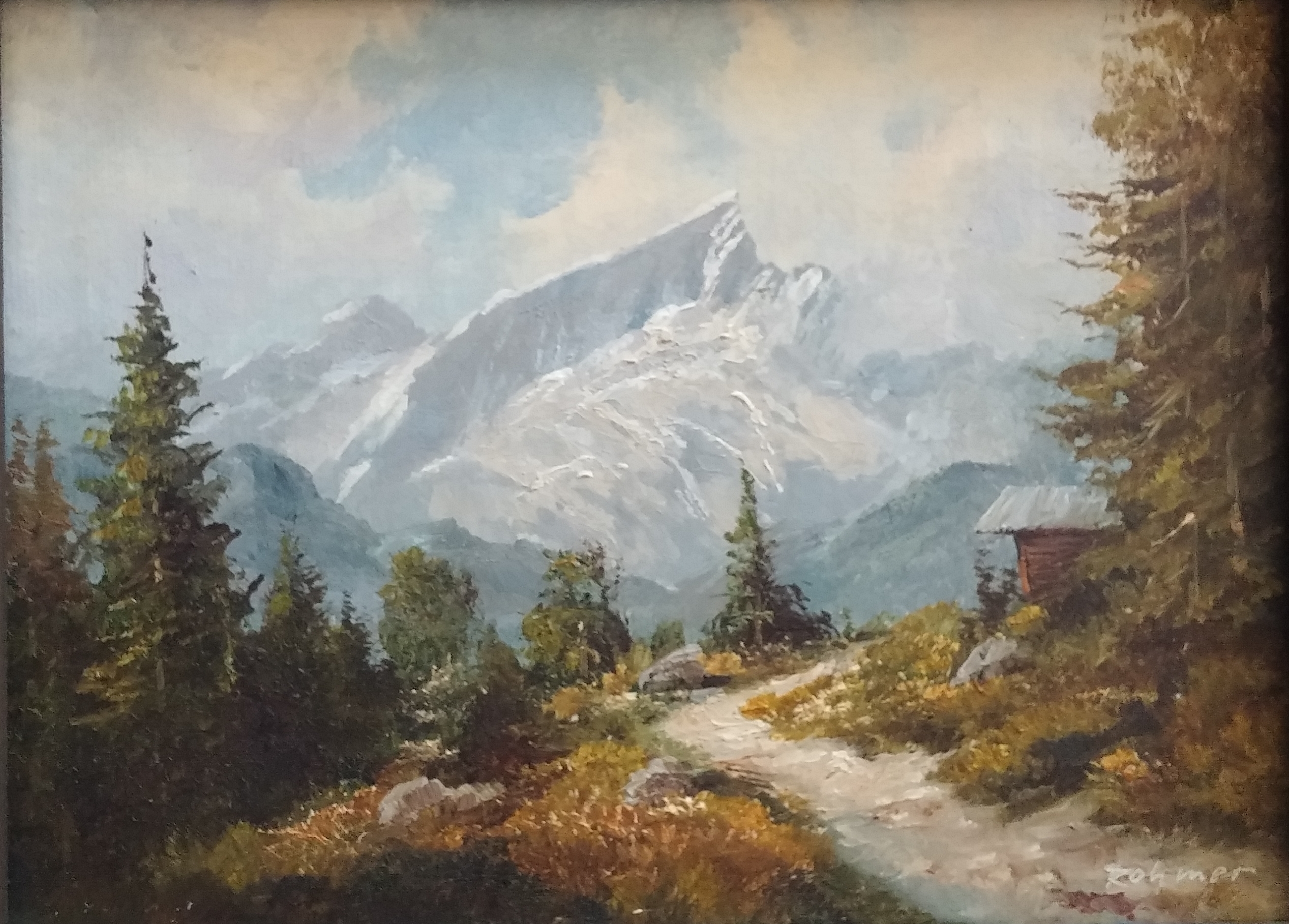
Leo painted landscapes with themes in Alpine landscapes, fall colors, with
our without bodies of water, with or without snow, themes from surrounding
hamlets in Central Franconia, depending on the requisitions by art galleries
who sold to clientel by studying current favorites on the market.
These were considered his 'bread and butter' pieces—artwork to serve
the masses and provide regular income—and were mostly sold painted on
canvas, about 15 by 25 inches in size, some larger. Some themes
were commissioned to be mass-produced on paper or canvas, as they
are surfacing occasionally on flea markets in Central Europe.
The paintings
shown above are miniatures on wood slab, about 5 x 7 inches in size.
These beautiful miniatures attest to the talent of the artist who could
produce a work of art on any surface, using any tool and any type of paint.
Visit the Landscapes gallery
to view other examples of his versatility of style. |
| In the 1970s, Leo grew restless. Helene reports in a letter to granddaughter
Helen that a recession affected the business, forcing the couple to
supplement income with their
retirement funds. They felt that they needed to consolidate their
assets and plan for retirement on a smaller scale, selling the property
in the village of Reichelsdorf in search of a place to retire. |
 |
With his love of the Alpine region obvious by so many painted themes
throughout his career, Leo and Helene opted first for the popular German
town of Garmisch-Partenkirchen at the foot of the Zugspitze, Germany's
highest Alpine peak, then later for the pictoresque town of Ainring near
the Austrian border, just 30 minutes West of Salzburg. Enjoying a
lower cost of living, Leo and Helene spent their last days in Ainring.
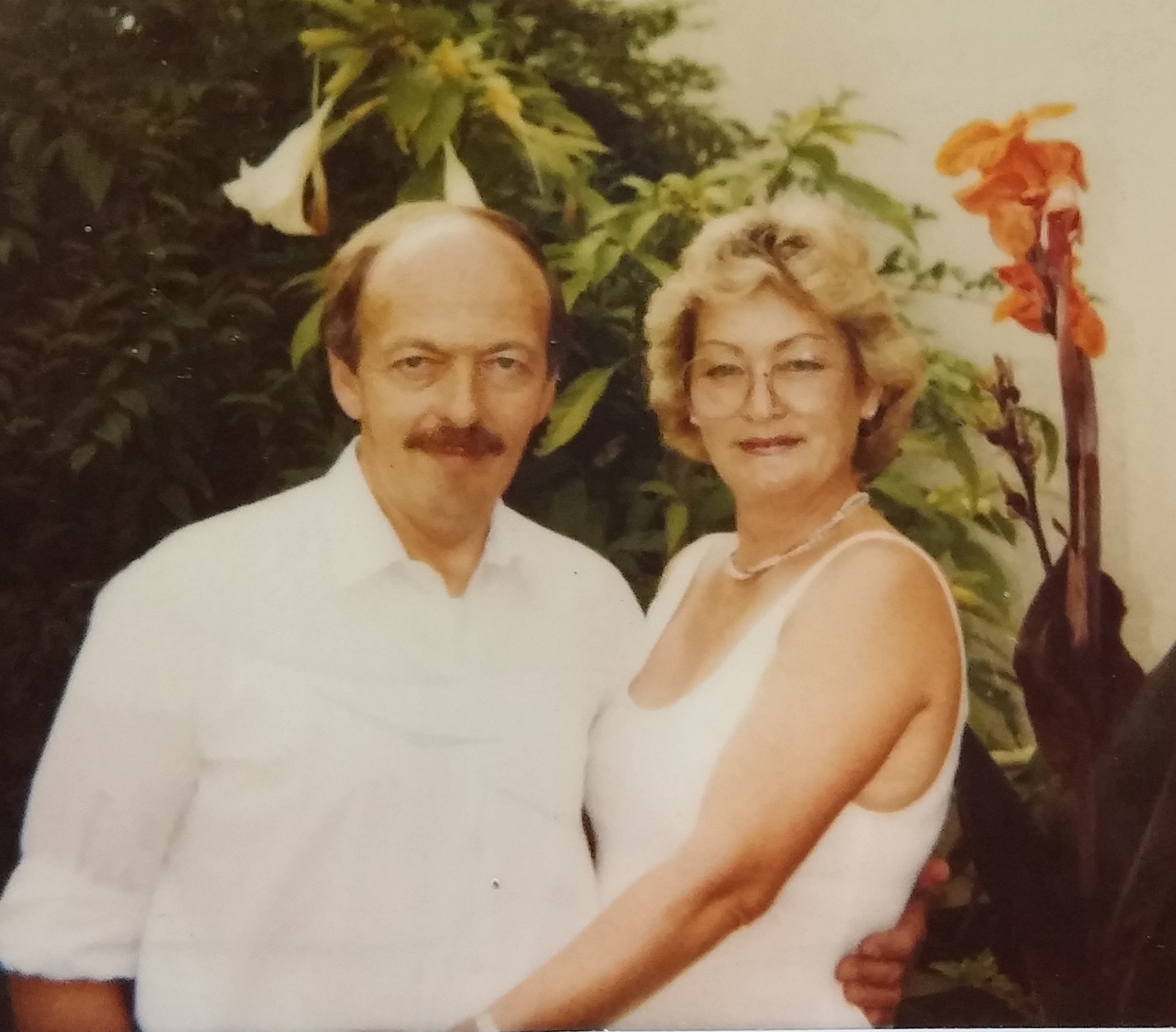
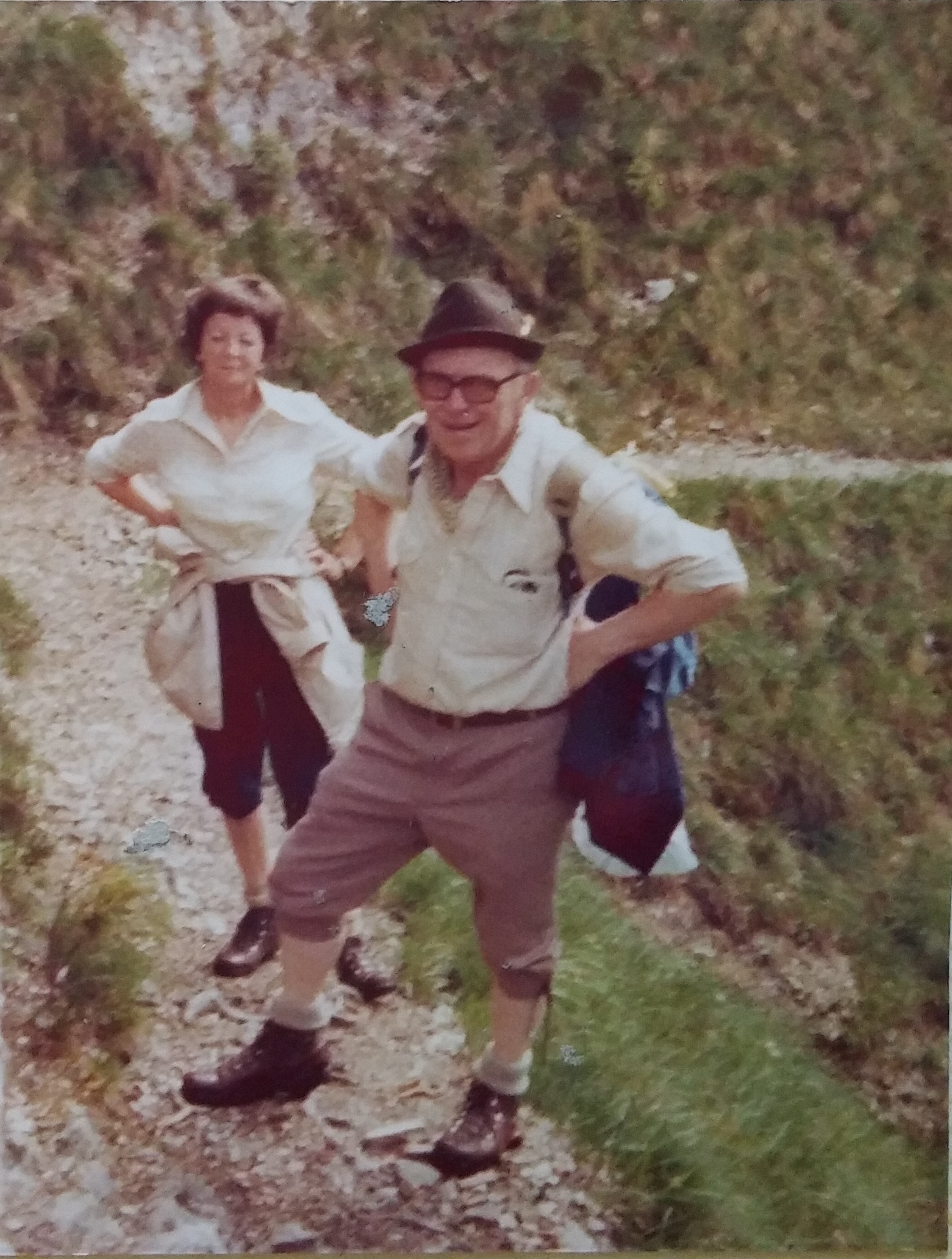
This photo of Helene and Leo was taken on Helene's birthday on
August 8, 1983, just a few weeks before Leo's passing. Helene
followed him in March of 2006. |
|
|